Animal Face Types: Korean Dongmulsang Traits & Styling
Decode Korean animal face types across eye angles, jaw taper, and nose proportions, plus compare cat, puppy, fox, deer, and bunny styling in a full table.
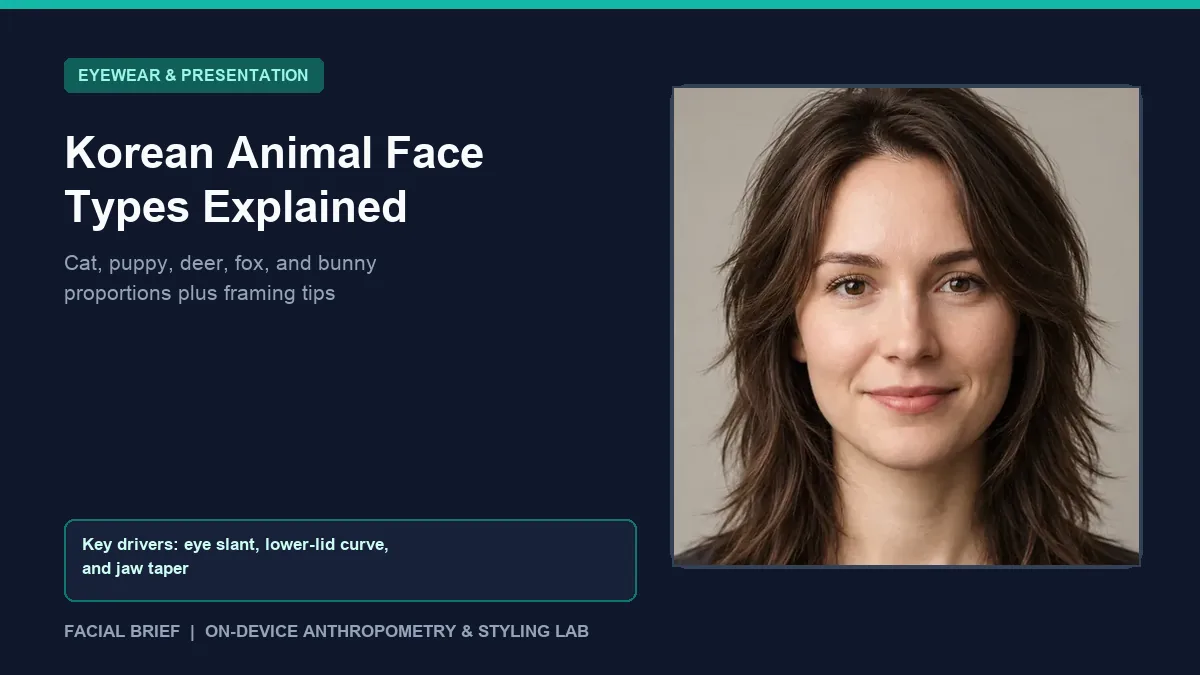
Long before online filters sorted selfies into mascots, South Korean beauty culture popularized classifying human features by animal face (dongmulsang) archetypes. Unlike pass-or-fail attractiveness charts, this framework describes the immediate visual mood created by your eye inclination, cheekbone prominence, nose bridge height, and jaw contour. That explains why fans on Reddit constantly debate whether an actor or idol has a sharp cat gaze or an approachable puppy smile, and why a casual selfie tilt or big grin can swing an automated score from deer to fox overnight. You can Take Animal Face Test using calibrated front-portrait landmarks to check which underlying bone and eye traits anchor your structure before selecting eyewear frames, brows, or hairstyles.
Key Takeaways
- Korean dongmulsang categorizes facial impressions around three geometric cues: outer eye corner tilt (upturned vs. downturned), lower-eyelid roundness, and jaw-to-cheek taper.
- Cat and fox types share positive outer eye angles (+2 to +7 degrees) and sharp chin tapers, while puppy and bunny types pair softer jaws with wider vertical eye apertures.
- Most adults combine traits from two archetypes at once; smiling photos shift automated results toward puppy or bunny, while neutral expressions favor cat or fox.
- Frame shape, eyebrow arch placement, and outer-corner liner easily shift visual impression between adjacent types without changing bone structure.
- Korean animal categories overlap closely with Western style frameworks (such as Kitchener Ingenue for bunny and Classic or Ethereal for deer), functioning as styling guides for hair, makeup, and glasses.
How Korean Animal Face Geometry Works
In everyday conversation across Seoul beauty salons and K-pop communities, dongmulsang captures the immediate emotional signal a face sends at rest. As commenters explain in r/KoreanBeauty threads on how people spot animal types intuitively, observers read four anatomical relationships simultaneously:
First is eye fissure slant and inner-corner sharpness. An eye whose outer corner rises +2 to +7 degrees above the inner corner with a pointed medial tear duct reads sleek and feline. A neutral or slightly downturned outer corner (-2 to +1 degree) paired with generous vertical opening under the pupil reads warm and relaxed.
Second is malar cheekbone width relative to jaw corner fullness. High, angular cheekbones tapering smoothly toward a narrow V-line chin produce fox or cat geometry. Fuller buccal tissue and rounded gonial angles keep the lower face soft, creating puppy or bear proportions.
Third is nasal bridge height and tip length. Straight, narrow nasal bridges elongate the midface and reinforce fox sharpness. Shorter, rounded nasal tips compress the middle third slightly and anchor bunny or puppy youthfulness.
Fourth is lip and dental posture at rest. Slightly visible central incisors or fuller mid-lip curves brighten expressions quickly, a cue K-pop fans note in r/kpophelp threads listing animal face archetypes. Checking your broader geometric baseline with our Find Your Facial Type profiler separates fixed bone ratios from fleeting expressions.
Breaking Down the Core Pretty Face Types
While social media invents playful hybrid creatures weekly, stylists and beauty discussions rely on six core korean animal face archetypes. Each pairs distinct structural proportions with tailored everyday styling.
Cat Face (Goyangi-sang)
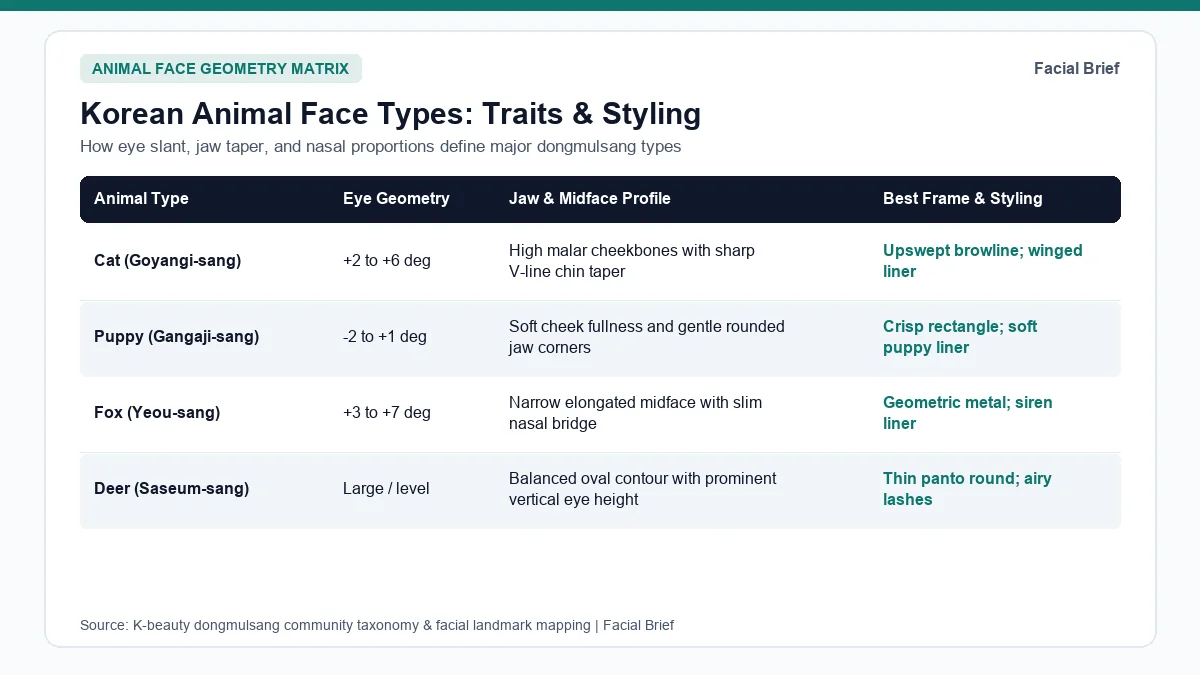
The cat archetype pairs upturned almond eyes (+2 to +6 degrees of canthal lift) with defined cheekbones and a crisp, tapered jaw. At rest, the gaze looks cool, poised, and composed, seen in public figures like BLACKPINK's Jennie and Han So-hee. Stylists usually preserve that clean geometry with thin upward liner wings, gently arched brows, and sleek center or deep side parts that mirror cheekbone lines.
Puppy Face (Gangaji-sang)
Puppy types represent the warm, approachable counterpart in Korean beauty culture. Eyes sit level or softly downturned at the outer corners, paired with gentle under-eye fullness (aegyo-sal) and a curved jawline. Celebrities like Park Bo-gum and TWICE's Dahyun show how rounded contours look welcoming even at rest. Soft layered bangs, straight horizontal brows, and blush placed high on the cheek apples reinforce that open energy.
Fox Face (Yeou-sang)
Fox types share feline eye lift with cat types yet stretch horizontally and vertically along a slimmer bone framework. Think narrow facial width, high cheekbones, long slim nose bridges, and pointed chins, often with narrower almond or monolid eye openings. Because horizontal eye length dominates vertical height, crisp geometric eyewear, elongated siren liner, and sleek low hairstyles match the sculpted silhouette cleanly.
Deer Face (Saseum-sang)
A classic animal pretty face type prized across Korean cinema, the deer archetype balances large, luminous, level eyes with delicate bone structure, clean brow spacing, and an elongated neck. Girls' Generation's Yoona and Suzy are recurring benchmarks on style forums. Heavy dark eyeliner and thick boxy frames overwhelm deer delicacy. Translucent skin finishes, curled vertical lashes, neutral lip tints, and thin metal panto frames preserve the airy clarity around the eyes.
Bunny (Tokki-sang) and Bear (Gom-sang) Types
Bunny types blend round, bright eyes with a compact nose and prominent front smile contour, exemplified by NewJeans' Danielle or BTS's Jungkook. Bear types (such as MONSTA X's Shownu) sit on the opposite scale: broader jaw structure, steady relaxed eyes, and solid midface proportions that read calm and dependable. Men with sharper, angular jaw corners and prominent brow ridges are also tagged "dinosaur" (gongryong-sang) in K-pop discussions.
Comparing Korean Animal Types, Western Essences, and Styling Rules
Readers in Western style spaces often ask how dongmulsang relates to Kibbe or Kitchener typing. Discussions on r/JohnKitchener comparing animal face types to Kitchener essences map the overlap neatly: bunny matches Ingenue youthfulness, deer blends Classic symmetry with Ethereal delicacy, and fox or cat align with Dramatic or Romantic sharpness. Yet as a satirical r/kibbecirclejerk thread on Korean animal face trends notes, forcing real faces into single animal boxes creates confusion when mixed traits overlap.
| Animal Type | Korean Term | Eye & Lid Geometry | Cheek & Jaw Structure | Ideal Eyewear & Makeup Cue | Complementary Energy |
|---|---|---|---|---|---|
| Cat | Goyangi-sang | Upturned almond (+2 to +6 deg); sleek lid | High malar bone; sharp V-taper chin | Mild cat-eye or browline; crisp upper wing | Cool, poised, chic |
| Puppy | Gangaji-sang | Level to downturned (-2 to +1 deg); full lower lid | Soft cheek volume; curved lower jaw | Rectangular frames; soft downward brown liner | Warm, friendly, approachable |
| Fox | Yeou-sang | Narrow, sharp outer tilt (+3 to +7 deg) | Slim facial width; high bridge; pointed chin | Geometric wire frames; nose bridge contour | Sleek, high-fashion, intense |
| Deer | Saseum-sang | Large, round-almond; neutral horizontal tilt | Balanced oval width; delicate slender neck | Thin round metal frames; vertical lash lift | Graceful, calm, luminous |
| Bunny | Tokki-sang | Wide circular aperture; bright center iris | Compact lower third; soft round cheek apples | Translucent acetate; center-lid shimmer | Bubbly, youthful, bright |
| Bear / Dino | Gom / Gongryong | Calm medium aperture; steady brow support | Broad mandible; sturdy bizygomatic span | Bold square or navigator rims; minimal wing | Grounded, reliable, striking |
When matching eyeglasses or sunglasses to your archetype, optical contrast principles from our glasses for face shape guide and square-face sunglasses guide apply directly. Puppy and bunny faces gain crisp visual structure from rectangular or lightly squared Wayfarer rims, while angular fox and broad bear or dinosaur structures soften nicely inside rounded panto or curved navigator frames.
Why AI Animal Face Tests Flip Results Across Photos
If uploading three selfies gives three different animals, the analyzer is reacting to camera geometry and expression shifts. Redditors comparing notes in r/VindictaRateCelebs debates on the animal face trend spot four variables that skew online animal face scores:
First, smiling lifts the lower eyelid (orbicularis oculi) and widens cheek apples horizontally, pushing a neutral cat or fox face directly into puppy or bunny territory. Take your baseline scan with relaxed lips and neutral eyes.
Second, wide-angle selfie focal length distorts midface depth. Holding a front phone camera 25 cm away expands the nasal bridge and tapers jaw corners backward, exaggerating fox sharpness while hiding sturdy jaw angles. Stepping back 5 feet with a 2x lens keeps proportions true.
Third, makeup tricks automated landmark detectors. A 2 mm upturned eyeliner wing nudges outer eye coordinates upward, while nose-bridge contour lines mimic higher bone bridges.
Fourth, head tilt shifts perceived eye tilt immediately. Dropping your chin while glancing up makes upturned eyes read level or downturned; tilting your chin upward flattens jawline curvature. Once you capture a leveled, shadow-free scan, see how hair texture, brow thickness, and grooming shift presentation in our glow-up styling guide or examine multi-metric proportions inside a sample biometric report.
Frequently Asked Questions
How do I tell which Korean animal face type I have?
Evaluate three traits in a straight-on, unsmiling photo taken at eye level: outer eye-corner slant relative to the inner corner, lower-eyelid roundness, and jaw taper below your cheekbones. Upturned, narrow eyes paired with a slim tapered chin match cat or fox proportions, while wider vertical eyes and softer rounded jawlines align closely with puppy, deer, or bunny archetypes across Korean beauty classifications.
Can you be a mix of two animal pretty face types?
Yes. Pure single-animal matches are uncommon outside heavily styled editorial shoots, and most adults blend features from two neighboring categories. Many faces pair large, calm deer eyes with a softer puppy jawline, or upturned cat eye corners with compact bunny cheek fullness. Identifying your primary eye shape and secondary jaw contour guides glasses and hair choices better than forcing one rigid label.
Why does my animal face test result change when I smile?
Smiling contracts muscles around the cheeks and lower eyelids, compressing vertical eye height while pushing cheek apples outward and rounding the jaw silhouette. That natural muscle shift moves neutral cat or fox proportions straight toward puppy or bunny scores in automated tests. For consistent baseline tracking across photos, scan an unsmiling expression under flat front lighting at eye height from five feet back.
Which Korean animal face type is considered the most attractive?
No single archetype ranks highest universally across Korean or international beauty communities. Puppy and deer types are widely admired for warmth, classical balance, and everyday approachability, while cat and fox types attract praise for crisp bone structure and editorial intensity. Overall facial harmony, clear skin texture, and well-proportioned hair or eyewear frames carry far more visual weight than any animal label alone.
Referenced Community Discussions & Sources
- r/KoreanBeauty: How observers intuitively spot Korean animal face types: Details how eye tilt, under-eye fullness, and jaw taper work together in dongmulsang classification.
- r/kpophelp: Full breakdown of cat, puppy, bunny, deer, bear, and dinosaur types: Lists major K-pop archetypes alongside key celebrity examples and distinct styling traits.
- r/JohnKitchener: Comparing Korean animal face types to Kitchener essences: Maps deer, bunny, fox, and cat geometry onto Classic, Ingenue, Dramatic, and Ethereal styling vocabularies.
- r/VindictaRateCelebs: Community perspectives on the Korean animal face trend: Examines how expression, camera framing, and makeup shift perceived archetypes.
- r/kibbecirclejerk: Why rigid animal typology overlaps and breaks down: Critiques over-literal categorization when real faces combine blended structural features.
- K-beauty styling reference: Dongmulsang aesthetic taxonomy evaluating eye fissure slant, aegyo-sal lower-lid volume, nasal tip length, and mandibular taper.
Paired Facial Brief Analyzer
Measure your own proportions on-device
Run private 478-point landmark geometry in your browser with zero server photo upload on free tools.
Continue Reading