Why Nasolabial Folds Appear in Your 20s and What Actually Helps
Why a nasolabial fold in your 20s appears: maxillary anatomy, retinoid collagen timelines, filler migration risks, and our comparison table.
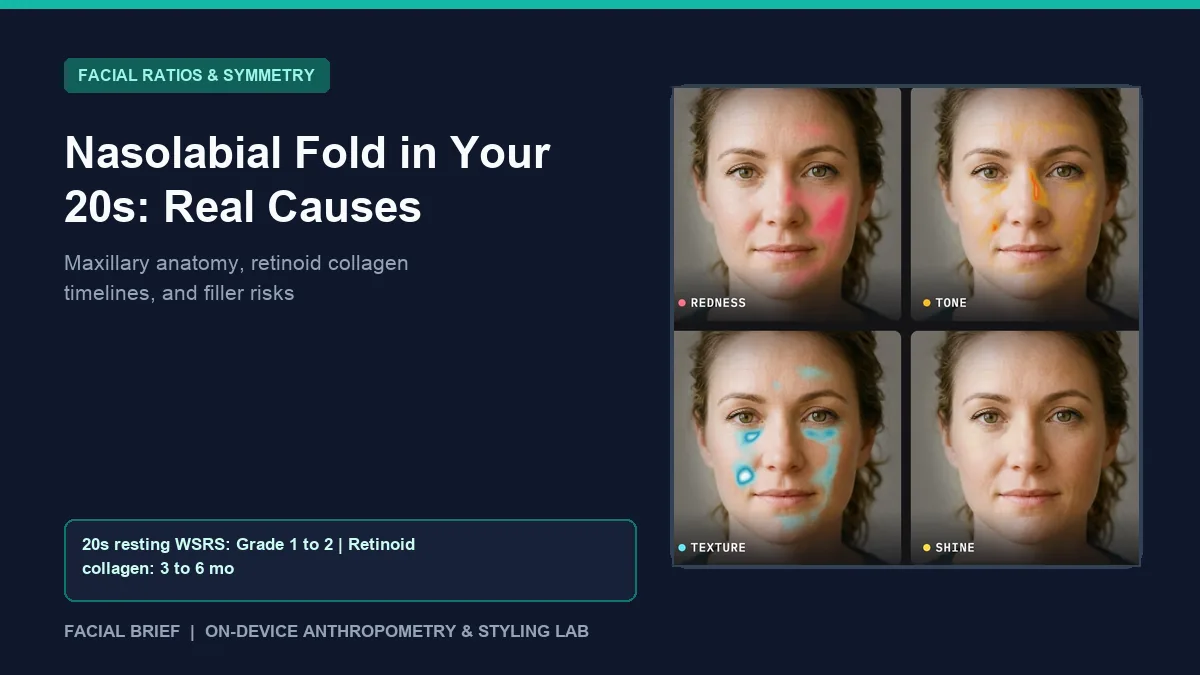
Noticing a nasolabial fold 20s mirror shadow often sends people straight into skincare panic, searching for ways to erase lines they assume signal premature aging. Anatomically, the nasolabial fold is not a surface wrinkle by default. It is the natural hinge where dense cheek fat pads and skin meet the stiffer muscle attachments around the upper lip so your face can smile, speak, and chew without tearing tissue.
Even toddlers show deep creases when laughing, and harsh overhead bathroom light casts strong downward shadows along healthy midface curves. Before adding aggressive actives or booking injectable consultations, evaluate surface hydration, fine-line score, and tone uniformity under even light with Run Skin Analysis Free, or compare perceived visual maturity in the Face Age Estimator.
Key Takeaways
- On dermatology's 5-point Wrinkle Severity Rating Scale (WSRS), adults in their 20s typically sit at Grade 1 (absent at rest) or Grade 2 (shallow fold during movement); early resting creases usually reflect bone or cheek pad anatomy rather than aging.
- A flatter maxilla, slight dental protrusion, or naturally fuller malar fat pads cast shadow next to the nose from adolescence onward, which creams cannot structurally lift.
- Side-sleeping into firm pillows, rapid 5 to 10 kg weight drops, barrier dehydration, and repeated lip pursing from vaping deepen superficial creasing prematurely.
- Consistent topical retinoids plus daily SPF 30+ speed turnover in 2 to 4 weeks and raise Type I and Type III collagen density over 12 to 24 weeks, smoothing surface texture without altering bone depth.
- Patients across
r/PlasticSurgerycaution 20-somethings against direct nasolabial hyaluronic filler because daily smiling drives gel migration and puffy midface distortion.
Anatomy vs. Aging: Why Nasolabial Folds Show Up in Your 20s
Skincare ads frequently lump structural creases together with photoaged wrinkles, convincing young adults that their collagen failed prematurely. Clinical grading scales separate those causes cleanly.
How WSRS Grading Separates Dynamic Folds from True Wrinkles
Dermatologists score fold depth using the 5-point Wrinkle Severity Rating Scale (WSRS):
- Grade 1 (Absent): Smooth skin continuity without a visible crease at rest.
- Grade 2 (Mild): Shallow fold visible during expression or faint shadow under overhead lighting.
- Grade 3 (Moderate): Clear static fold present at rest without skin overhang.
- Grades 4 and 5 (Severe to Extreme): Deep redundancy driven by decades of elastin loss and cheek pad descent.
Most adults in their 20s sit at Grade 1 or Grade 2, with measurable micro-increases in width starting gradually between the late 20s and early 30s. That biological pace explains why commenters in this r/Skincare_Addiction thread from a 21-year-old and this r/GracefulAgingSkincare post at age 20 point people back to teenage photos: the shadow usually existed at 16, simply magnified later by harsh overhead light and close front lenses.
Maxillary Structure, Cheek Fat Pads, and Weight Shifts
When resting folds appear deeper than peers of the same age, bone support usually explains the contour. A flatter upper jaw (maxilla), mild dental protrusion, or thick malar fat pads cast a natural shadow next to the nasal wing, a point echoed across this r/30PlusSkinCare thread on 20s smile lines. Reviewing midface ratios in our facial measurement norms guide and lower-third framing in our strengthen jawline guide clarifies when bone geometry, rather than skin laxity, drives the shadow.
Fast weight drops create another common shift. As noted in this r/Skincare_Addiction thread on 26-year-old folds, losing 6 to 12 kilograms rapidly deflates subcutaneous cheek support faster than skin retracts, deepening shadows temporarily even when skin elasticity remains sound.
Daily Habits That Deepen Smile Lines Early
While topical routines cannot move skeletal bone, daily friction and skin hydration alter how crisp the surface line reads.
Side-Sleeping Compression and Barrier Dehydration
Pressing one cheek into a cotton pillow for seven hours nightly folds the midface along the exact nasolabial hinge, often making one side crease deeper than the other by age 24. Gradually shifting to back sleeping, using a contoured pillow, or switching to smooth silk lowers overnight mechanical folding.
Surface dehydration mimics wrinkles almost overnight. When dry winter indoor air or aggressive acid exfoliation strips water from the stratum corneum, fine etching shows inside the smile groove by midday. Applying humectants (glycerin, hyaluronic acid, panthenol) onto damp skin under a ceramide cream plumps dry surface creases within 3 to 7 days.
Lip Pursing, Sun Exposure, and Morning Puffiness
Two daily stressors dominate r/SkincareAddiction 25-year-old line threads. Frequent vaping or smoking pairs repetitive lip-pursing tension with free-radical breakdown of dermal elastin and poorer capillary flow. Skipping daily sunscreen also allows UVA exposure through car glass and overcast skies to chip away silently at dermal collagen throughout your twenties.
Salty dinners, alcohol, or mild sinus congestion pull extra interstitial fluid into upper cheek pads overnight, making soft tissue overhang the crease ligament in morning light. Gentle upward lymphatic massage over facial oil clears temporary morning swelling for hours without changing underlying collagen.
Evidence-Based Skincare vs. Cosmetic Procedures in Your 20s
Once lighting, sleep friction, and hydration settle, young adults weigh preventive topicals against clinic procedures.
Retinoid Collagen Timelines and Daily Sunscreen
Topical retinoids (retinol, retinaldehyde, or prescription tretinoin) remain the primary evidence-backed preventive step recommended across r/SkincareAddiction preventive threads. Retinoids bind retinoic acid receptors, suppress collagen-degrading MMP enzymes, and stimulate fibroblasts to synthesize Type I and Type III procollagen:
- Weeks 2 to 4: Faster surface turnover smooths rough texture and mild dry creasing.
- Weeks 12 to 24 (3 to 6 months): Histological gains in dermal collagen density help fortify skin thickness.
- Months 6+: Daily retinoid plus broad-spectrum SPF 30+ slows progression up the WSRS scale.
Introduce retinoids two or three nights weekly over moisturizer; pushing nightly high-strength tretinoin prematurely peels the barrier and makes creases look drier and sharper. Pair consistent skincare priorities with grooming balance in our glow-up tips guide or structure your weekly plan through the Glow-Up Pack.
Why Reddit Warns Against Early Nasolabial Filler
On injectable forums like this r/PlasticSurgery debate at 28 and this mid-20s consultation thread, patients warn strongly against placing direct filler inside young smile folds. Smiling compresses that groove thousands of times daily, often pushing hyaluronic gel ($600 to $1,200+ per syringe, 9 to 18 month duration) laterally into puffy lip shelves. Conservative board-certified dermatologists assess lateral cheekbone structure or discuss superficial microneedling ($250 to $600 per session) only when static etching persists, and frequently advise 20-somethings to leave expressive midface anatomy alone.
Nasolabial Fold Causes and Reduction Options Compared
The table below lines up everyday routines beside clinical interventions so you can weigh timelines, costs, and migration trade-offs cleanly.
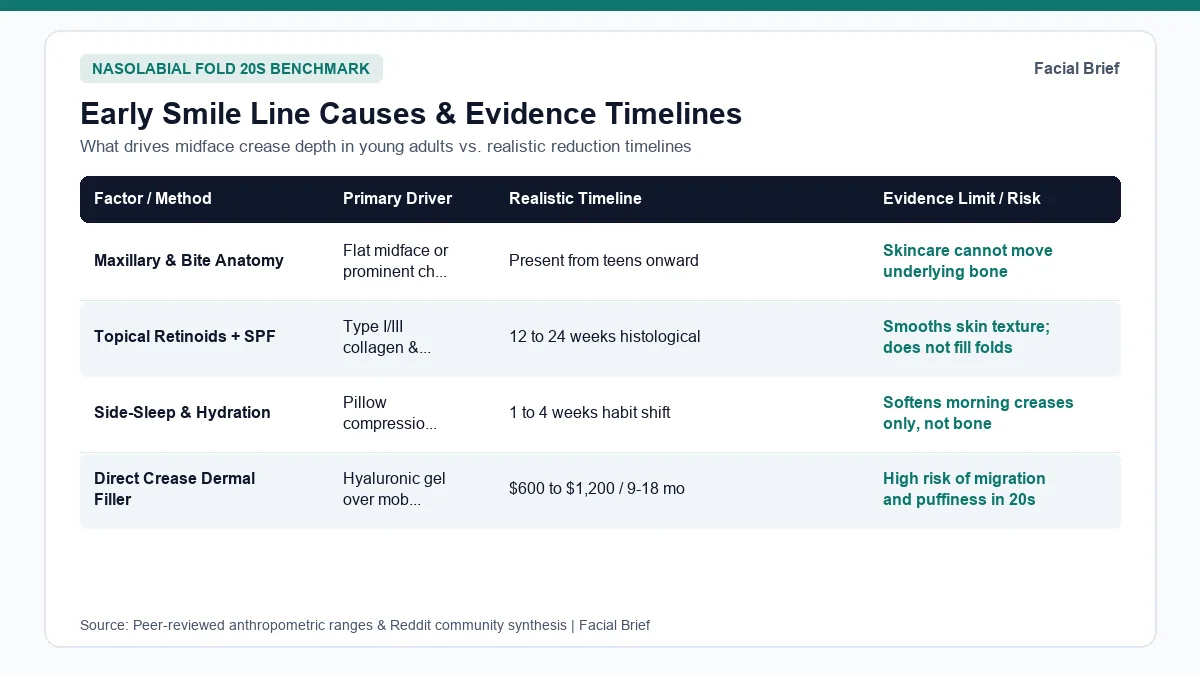
| Method or Habit | Primary Target | Realistic Timeline | Typical Cost | Limits & Risks |
|---|---|---|---|---|
| Daily SPF 30+ & Retinoid | Collagen preservation & texture | 12 to 24 weeks collagen | $20 to $90 / quarter | Barrier dryness if rushed; cannot lift bone |
| Hyaluronic & Ceramide Layer | Superficial dehydration etching | 3 to 7 days surface plump | $15 to $45 | Temporary surface water; fades if skipped |
| Back-Sleeping & Low Friction | Overnight pillow crease depth | 2 to 6 weeks habit shift | $0 to $50 pillowcase | Helps morning asymmetry; zero fat/bone change |
| Lymphatic Massage / Gua Sha | Morning cheek water puffiness | Immediate (lasts hours) | $0 to $25 | Temporary fluid drainage; harsh tugging irritates |
| Clinical Microneedling | Mild etched epidermal lines | 3 to 6 months (3 sessions) | $250 to $600 / session | Modest dermal boost; zero volume or bone lift |
| Hyaluronic Dermal Filler | Deep static fold or cheek pad | Immediate (lasts 9 to 18 mo) | $600 to $1,200+ | Migration puffiness, vascular risk, dissolve cost |
Checking skin texture alongside midface symmetry and lower-third proportion stops you from blaming skin for normal bone geometry. Facial Brief's 42-Metric Full Report organizes skin clarity, midface length, and proportion balance side by side, previewed on our sample Face Report page.
Frequently Asked Questions
Is it normal to have visible nasolabial folds in your early 20s?
Yes. Nasolabial folds are normal anatomical boundaries where mobile cheek tissue meets the firmer musculature of the upper lip. On clinical Wrinkle Severity Rating Scales, young adults normally show faint lines at rest or clear folds when smiling. Early visibility at 20 to 25 usually reflects maxillary bone projection, cheek fat pad shape, or overhead lighting rather than premature aging.
Can retinol or tretinoin completely erase a nasolabial fold in your 20s?
No. Topical retinoids speed up cell turnover within 2 to 4 weeks and stimulate fresh Type I and Type III dermal collagen over 3 to 6 months, which smooths fine surface etching inside the crease and slows gradual deepening into your thirties. However, no vitamin A cream can lift a naturally heavy cheek fat pad or project a recessed maxilla bone forward.
Does sleeping on your side actually worsen smile lines on one side?
Yes, over months and years of steady repetition. Pressing one cheek firmly against a cotton pillow compresses the nasolabial hinge for seven or eight hours every night, commonly leaving one morning crease slightly sharper than the opposite cheek. Training yourself to sleep flat on your back or using a smoother silk pillowcase limits overnight mechanical skin folding and morning asymmetry.
Should someone in their 20s get filler for nasolabial folds?
Most board-certified dermatologists and experienced r/PlasticSurgery patients urge strong caution before injecting dermal filler directly into the nasolabial groove in your twenties. Because smiling and talking compress that mobile channel thousands of times daily, hyaluronic gel frequently migrates laterally or upward into puffy upper-lip shelves. Rule out harsh overhead lighting, barrier dehydration, and normal expressive cheek anatomy before consulting a specialist.
Referenced Community Discussions & Sources
- r/Skincare_Addiction: Prominent nasolabial folds at age 21: Explains why expressive midface creases and natural facial fat pads appear early without indicating rapid skin aging.
- r/GracefulAgingSkincare: Seeing smile lines emerge at 20: Covers overhead bathroom lighting distortion and normal skin folding in healthy young adults.
- r/30PlusSkinCare: 20-something folds linked to bone and cheek structure: Breaks down maxillary projection and malar fat-pad anatomy versus dermal elasticity.
- r/Skincare_Addiction: Intense smile lines at 26 after stress and weight shifts: Details how rapid weight changes, sleep loss, and dehydration sharpen midface shadows.
- r/SkincareAddiction: Preventive routine for nasolabial lines at 26: Outlines daily sunscreen, gentle retinoids, and barrier hydration as realistic first-line habits.
- r/SkincareAddiction: Managing early mouth lines at 25: Highlights smoking/vaping lip pursing, SPF habits, and realistic topical retinol limits.
- r/PlasticSurgery: Weighing filler for nasolabial folds at 28: Strong patient warnings against direct-crease hyaluronic filler migration in dynamic lower faces.
- r/PlasticSurgery: Mid-20s consultation advice for deep smile folds: Discusses conservative midface structural evaluation before considering any injectable procedures.
- Clinical References: Wrinkle Severity Rating Scale (WSRS Grades 1-5) photonumeric grading methodology; topical tretinoin/retinol histological procollagen synthesis studies (12 to 24 week dermal thickening timelines).
Paired Facial Brief Analyzer
Measure your own proportions on-device
Run private 478-point landmark geometry in your browser with zero server photo upload on free tools.
Continue Reading